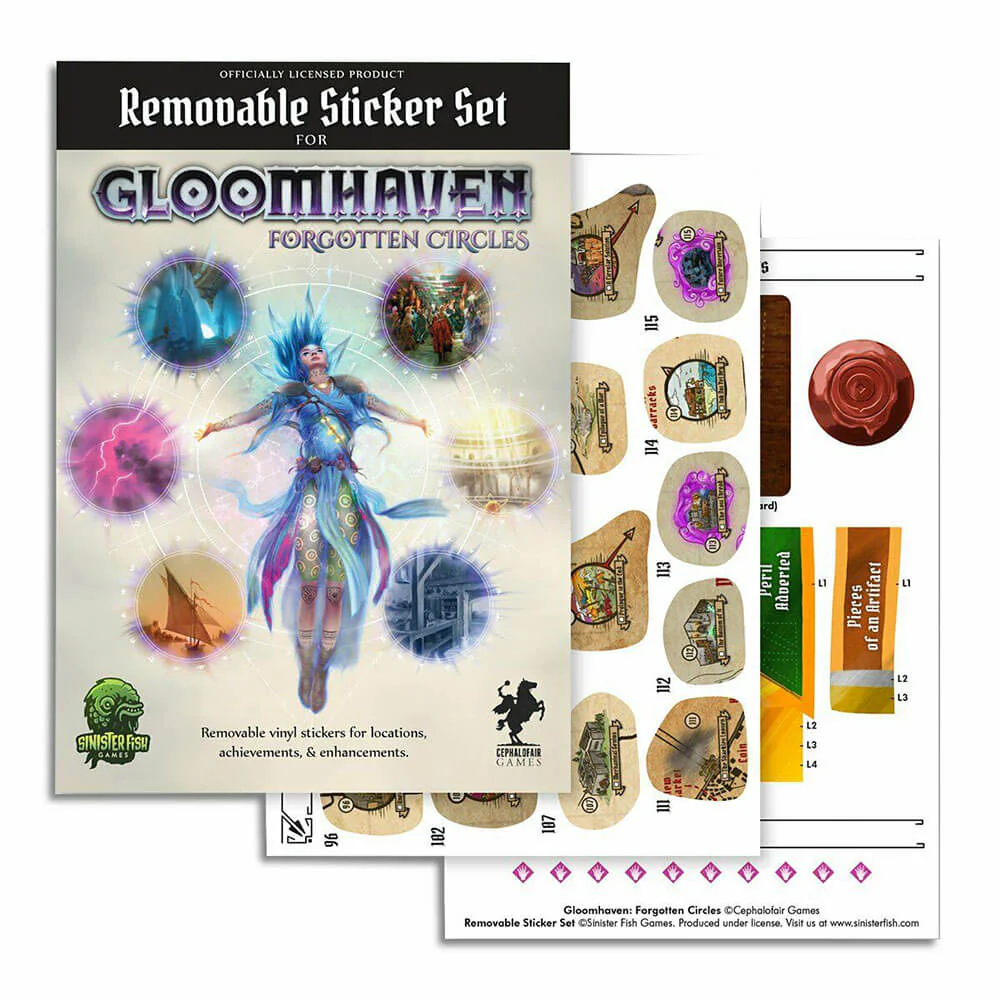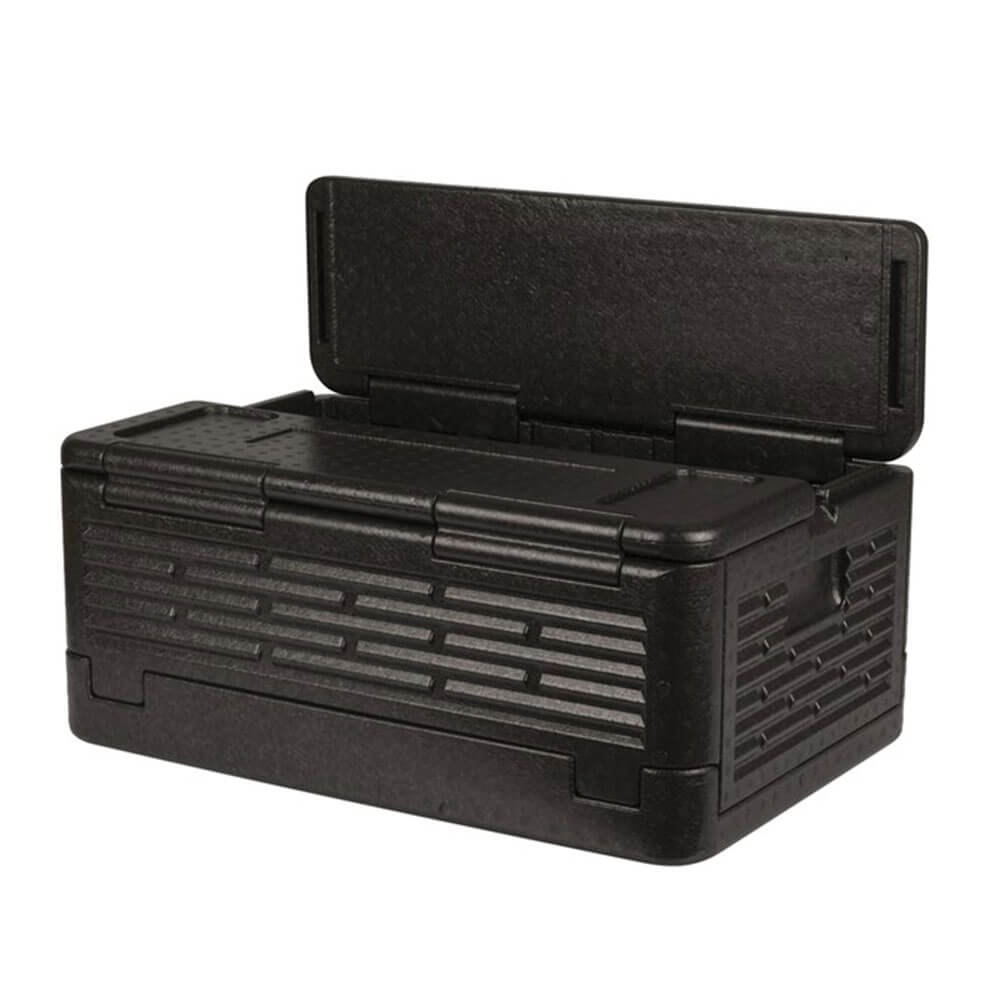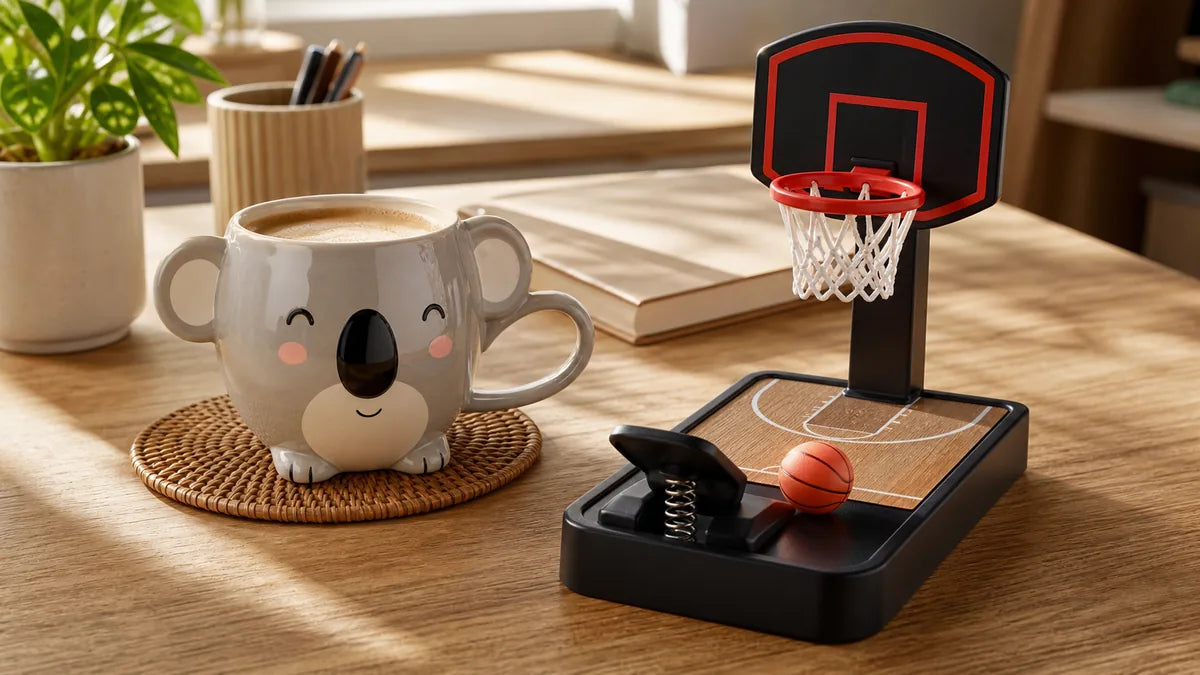
The best budget gift is not the biggest thing you can squeeze under $50. It is the one that fits something the recipient already does: hosting friends, packing for weekends away, solving puzzles, improving their desk or adding a little fun to the daily routine.
Start with a practical path when you do not know them well. Add humour, nostalgia or personality when you have stronger clues. And if they already own the obvious basics, choose something adjacent to the habit rather than another version of the same thing. That simple approach turns a broad budget into a much shorter, much more useful shortlist.
The quickest way to match a budget gift to its recipient
Before browsing, identify four things: your relationship, one repeated habit, the safest level of playfulness and the amount of space the gift can reasonably occupy. A person's habits are usually more reliable than broad labels such as "foodie", "gamer" or "outdoorsy".
The table below gives you a practical first route. Treat the safer path as your default and the bolder path as an option when you know the recipient's tastes well.
| Recipient type | Details |
|---|---|
| Partner or close family member |
Clue worth using: A routine you see often Safer path: Useful upgrade or home accessory Bolder path: Personal humour or nostalgia Main risk: Buying something practical but impersonal |
| Friend or sibling |
Clue worth using: Shared jokes and social habits Safer path: Compact game, puzzle or drink accessory Bolder path: Cheeky novelty with a second use Main risk: A joke that becomes cupboard clutter |
| Teen or young adult |
Clue worth using: How they spend downtime Safer path: Desk, room, travel or activity gift Bolder path: Bold décor or playful gadget Main risk: Guessing their style from a passing trend |
| Workmate, teacher or neighbour |
Clue worth using: Publicly visible interests Safer path: Desk, kitchen or everyday utility Bolder path: Light humour suitable for group opening Main risk: Becoming too personal |
| Host or homebody |
Clue worth using: What happens when people visit Safer path: Serving, kitchen or home-use accessory Bolder path: Conversation-starting décor Main risk: Duplicating equipment they already own |
| Traveller or outdoors person |
Clue worth using: How and where they travel Safer path: Compact organiser, light or practical helper Bolder path: Novel weekend-use gadget Main risk: Size, power or compatibility problems |
| Collector or nostalgia fan |
Clue worth using: Exact theme and display habits Safer path: Display-adjacent utility Bolder path: Theme-specific display piece Main risk: Duplicates, wrong version or no shelf space |
This is the useful handoff: recipient clue → budget band → practical or playful path → risk check. If you cannot complete the first step with a real observation, stay broad and useful. "They work in an office" is weak evidence. "They always eat lunch at their desk and keep misplacing small items" is a much better buying clue.
Choose the budget band before choosing the category
A $50 ceiling is a limit, not a target. Spending closer to the maximum does not automatically make a gift more thoughtful, especially when a compact $25 item fits the recipient better. Decide how much of the budget belongs to the gift itself before browsing, particularly if you also need to account for presentation or another small addition.
| Budget band | Details |
|---|---|
| Under $25 |
Best for: Small thank-yous, group exchanges, neighbours and add-on gifts What to prioritise: One clear use, compact size and low setup risk Common mistake: Buying a bundle of tiny things with no real purpose |
| Under $30 |
Best for: Friends, siblings, workmates and casual family occasions What to prioritise: A useful accessory, small activity or playful item with staying power Common mistake: Paying for novelty without checking recipient fit |
| Under $50 |
Best for: Close relationships, milestone-adjacent gifts and stronger hobby clues What to prioritise: Better habit match, broader use or a more substantial experience Common mistake: Choosing the largest object simply because the budget allows it |
For a genuinely modest gesture, start with gift ideas around the $25 mark and look for one item that solves a small annoyance or supports a familiar routine. If you want a little more room for utility or play, compare gifts under $30 without treating the extra budget as an instruction to add more stuff.
Under $50 gives you flexibility, not permission to abandon the fit test. A compact game used at three gatherings has more gift value than a decorative object that never finds a home. Likewise, one well-chosen travel helper can beat an impressive-looking bundle that makes packing harder.
Partners and close family appreciate practical gifts with a personal clue

Close relationships give you better information, but they also raise expectations. A completely generic item can feel strangely distant, while an over-engineered sentimental gift can miss the recipient's actual personality. The sweet spot is often practical plus personal: something useful, chosen for a reason only a reasonably attentive person would notice.
Watch for repeated moments:
- They make a hot drink before every commute.
- They host casual snacks rather than formal dinners.
- They are always looking for a torch, opener, organiser or charging spot.
- They enjoy puzzles but rarely have time for long, complicated projects.
- They keep talking about a past hobby or a style from their younger years.
Those clues can lead to drink accessories, compact kitchen helpers, desk utilities, small games, travel organisers or restrained nostalgic décor. The category matters less than the use situation. Imagine the first week after the gift is opened: where does it live, when does it come out and what does it make easier or more enjoyable?
If your partner already owns the obvious version, move sideways rather than buying a duplicate. Someone with plenty of mugs may appreciate a coffee-preparation or carrying accessory instead. Someone with a crowded game shelf may get more use from a compact travel-friendly activity than another large box. Someone with a full display cabinet may prefer lighting, organisation or another display-adjacent helper.
Humour works here when it feels specific and affectionate. It fails when the entire gift is a punchline they must store indefinitely. The best funny budget gifts usually have a second job: they open, organise, illuminate, serve, hold or help with something after the laugh has landed.
Friends, siblings, teens and families often suit gifts that create a moment
For social recipients, shared-use gifts can deliver more impact than decorative objects. A compact card game, quick puzzle, tabletop activity or outdoor challenge has an immediate job: it gives people something to do. That makes it a strong route for siblings, friends, teens and families whose best clues involve game nights, holidays or cheerful competition.
Check the practical details before choosing an activity category:
- Player fit: Can the recipient use it solo, with one other person or only with a group?
- Session length: Will it suit a quick after-dinner round or require a dedicated evening?
- Learning effort: Does the group enjoy strategy, or do they want to begin before somebody finishes explaining the rules?
- Age suitability: Consider reading level, complexity and any adult-only humour.
- Portability: A compact activity is easier to take on holidays or to a friend's house.
- Replay value: Avoid a one-joke format unless the occasion itself is the point.
Teens and young adults can be tricky because trends move quickly and room aesthetics can be fiercely specific. When uncertain, choose something that supports an activity rather than declares a style on their behalf. Desk helpers, portable drinkware, travel accessories, small lighting options, puzzles and games are generally easier to integrate than large statement décor.
For a playful gift, use the "one-month test": can you picture them using or displaying it a month later? If the answer is no, you may be buying a reaction rather than a gift. A laugh is welcome; compulsory long-term storage is less hilarious.
Workmates, teachers, neighbours and casual recipients need low-risk usefulness

When the relationship is friendly but not intimate, restraint is a feature. The goal is to show that you noticed the person without pretending to know their private preferences. A compact desk utility, kitchen helper, drink accessory, small puzzle or broadly useful home item can feel considered while staying comfortably within the relationship.
Use the public unwrapping test: would the gift still feel appropriate if opened in a staffroom, classroom, family gathering or neighbourhood barbecue? If the answer depends on knowing an in-joke, reconsider whether everyone involved understands the joke in the same way. Risqué humour, appearance-related products and strongly scented personal items carry more risk than their size suggests.
For group gifts, agree on the buying logic before someone starts filling a basket. A clean workflow looks like this:
- Confirm the total budget.
- Nominate one useful recipient clue.
- Choose practical or lightly playful.
- Assign one person to buy, avoiding duplicate contributions.
- Check size, appropriateness and whether the gift requires extra equipment.
This handoff prevents the classic committee outcome: five people contribute ideas, nobody checks fit and the recipient receives an enormous novelty object because it was the only option everyone remembered. For teachers and helpful neighbours, everyday usefulness usually beats elaborate symbolism. The gesture already carries meaning; the object does not need to perform an emotional three-act play.
Homebodies, hosts, travellers and hands-on types reward use-case thinking
These recipients often appear easy to buy for because their interests produce plenty of categories. The trap is assuming every category item suits every version of the hobby. A camper, hotel traveller and daily commuter all "travel", but they have very different packing limits and equipment needs.
For homebodies and hosts
Choose for the way they actually use their space. Someone who invites friends over for casual snacks may appreciate serving or drink accessories, a quick group activity or a small kitchen helper. Someone who prefers quiet evenings may get more from a puzzle, reading-area light, desk accessory or practical piece of home décor.
Storage matters. Large serving items, appliances and display pieces need somewhere to live. When you have not seen much spare bench, shelf or cupboard space, choose compact utility over statement size.
For travellers and outdoors people
Start with the repeated friction point: keeping small items together, finding light after dark, carrying drinks, organising a car or reducing loose gear. Then check weight, packed size, power source and conditions of use. A clever object that requires the wrong battery, fitting or connection is not clever for long.
If they already have a well-developed kit, do not guess at specialist equipment. Choose a lower-risk supporting accessory or something useful between trips. Experienced hobbyists can be particular because their gear has to work together.
For hands-on practical people
Useful tools and gadgets can be excellent gifts when you understand the task. They become risky when specifications matter. Ask whether the item is self-contained, whether it needs installation and whether it suits the recipient's existing setup. If you cannot answer those questions, step back to an organiser, light, everyday helper or other broadly compatible category.
A useful before-and-after comparison illustrates the difference. Before: "They like camping, so I'll buy a random outdoor gadget." After: "They often set up camp after dark, so I'll look for a compact lighting helper and check how it is powered." The second route is narrower, safer and much more likely to escape the miscellaneous-gear drawer.
Collectors, nostalgia fans and people who have everything need a clutter strategy

Collectors are not short of objects; they are short of the right objects. Buying a specific figure, statue or themed item without knowing the exact collection can create duplicate, scale, version and display-space problems. Enthusiasm for a franchise or era is useful information, but it is not the same as a wish list.
Before choosing a display gift, check what you can reasonably infer:
- Do they collect one precise theme or anything from a broad genre?
- Do they display items boxed, open or in a mixed arrangement?
- Is there visible room on the shelf?
- Are their pieces small and uniform, or large statement items?
- Do they enjoy retro styling generally, or only one specific property?
- Would another object improve the collection or merely occupy its airspace?
When certainty is low, choose adjacent value. Display lighting, organisation, bookends, small functional décor or an activity with a nostalgic feel can acknowledge the interest without trying to curate the collection for them. If their shelves are already packed, move away from display entirely and choose something for a different habit.
The same rule helps with people who "have everything". Do not compete with everything. Find a recurring inconvenience, an overlooked routine or an activity that can be shared. The person may already own a drink bottle, but not a useful accessory for how they commute. They may own many games, but not a compact option for travel. They may have plenty of kitchen equipment, but still reach for an awkward everyday tool.
Run the no-clutter buyer-confidence check
Before committing, compare your chosen path against the recipient's habits and tolerance for setup. This compact buyer-confidence module helps distinguish a welcome surprise from a future donation-box resident.
| Gift path | Details |
|---|---|
| Practical utility |
Who it suits: Routine-driven recipients, workmates, travellers and home cooks Who should skip it: People particular about tools, colours or systems Setup or compatibility risk: Check dimensions, power, fittings and cleaning needs If they already have the obvious item: Choose an organiser, carrying accessory or supporting helper |
| Game or shared activity |
Who it suits: Social friends, siblings, teens and families Who should skip it: People who avoid group activities or have limited time Setup or compatibility risk: Check player count, age guidance, rules and session length If they already have the obvious item: Choose a different format, such as compact, outdoor or puzzle-based play |
| Playful novelty |
Who it suits: Close friends and relatives with clear humour cues Who should skip it: Formal relationships, minimalists and uncertain recipients Setup or compatibility risk: Low technical risk but high taste and clutter risk If they already have the obvious item: Choose humour attached to a useful function |
| Nostalgia or display |
Who it suits: Known fans with visible space and a specific interest Who should skip it: Casual fans, crowded collectors and people with restrained décor Setup or compatibility risk: Check theme accuracy, size and display location If they already have the obvious item: Choose display-adjacent utility or an activity with a nostalgic angle |
Then apply five final questions:
- What will they do with it? Name a real action, not "enjoy it".
- Where will it live? Desk, kitchen drawer, travel bag and game shelf are credible answers. "Somewhere" is a warning.
- Does it need anything else? Batteries, installation, compatible equipment and extra players all affect usability.
- Is the joke safe for the relationship? Close-friend humour and office-exchange humour are not interchangeable species.
- Would a smaller, clearer gift do the job better? If yes, keep the spare budget rather than manufacturing a bundle.
If you are still split between practical and playful, choose practical with one surprising detail. That tends to preserve the fun of gift discovery without sending the recipient home with a plastic monument to a five-second joke.
Budget gift FAQs
What is a good gift under $50 for someone I do not know well?
Choose a compact, broadly useful category linked to a visible routine: desk organisation, kitchen utility, drink accessories, a small puzzle or an everyday home helper. Avoid personal-care preferences, specialist equipment and humour that relies on a private relationship.
Is a practical or funny gift better?
Practical is safer when your recipient knowledge is limited. Funny can be better for close relationships when the humour is specific, kind and appropriate. The strongest compromise is a playful item with a genuine second function.
How can I make an inexpensive gift feel thoughtful?
Connect it to one concrete observation. A small travel organiser chosen for someone who is constantly taking weekend trips feels more thoughtful than a random bundle with a higher total price. A short note explaining the connection can also add meaning without adding clutter.
What should I buy for someone who already has the basics?
Choose an adjacent category rather than another basic. If they have mugs, consider drink preparation or carrying accessories. If they have games, look at compact or outdoor formats. If they have collectibles, consider display support, organisation or a completely different habit.
How do I avoid buying a gift that becomes clutter?
Prefer gifts that are used, consumed through an activity, stored compactly or attached to an existing routine. Check where the item will live and whether it duplicates something visible. If you cannot picture a realistic use within the first month, choose a safer path.
Pick one recipient clue, choose your budget band and decide whether the gift should be practical, playful or shared. Then explore gift ideas under $50 with that filter in mind. A clear gift path beats a heroic scroll through everything-and usually produces a much better surprise.
For a relevant browse path, compare this with electronics and gadgets and Family Games and LatestBuy gift guide.